
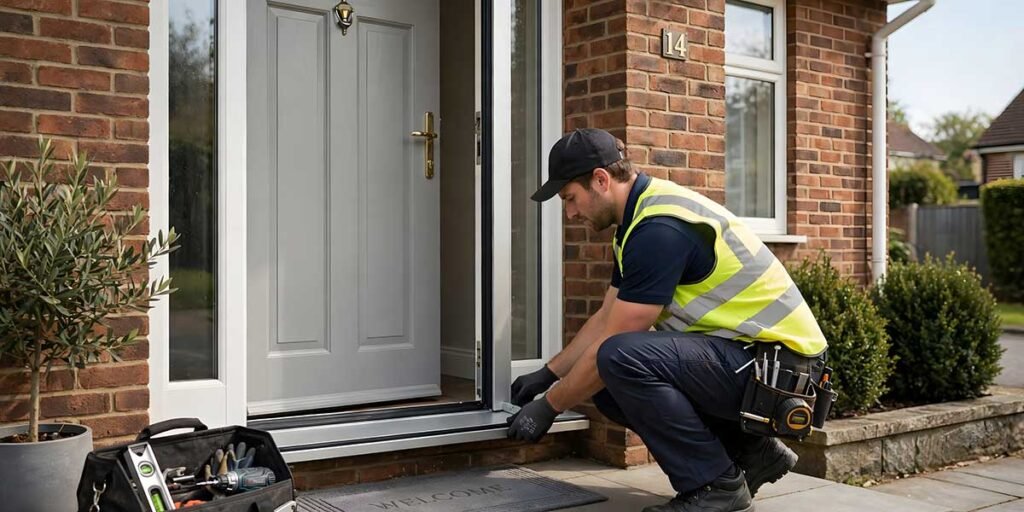
A new front door should swing smoothly and seal out wind and rain. When it sticks or leaks, the problem often starts with improper installation. Working with an experienced door installer in Lawrenceville, GA, helps you avoid these headaches.
Most front door installation problems come down to small details that are easy to miss. In this post, you can learn how professionals address them through careful measurements and precise adjustments.
Fit and Alignment Challenges That Professionals Solve
If you want to learn all about doors, from common styles to popular materials, This Old House offers a helpful overview. Whichever style you choose, a front door needs a straight, properly sized frame to open and close smoothly. These are the most common issues professionals watch for during installation.
Getting the Size Right
Improper door measurements are a common reason a new unit won’t fit. A wrong measurement can leave the frame too tight to shim or too loose to seal.
Professionals measure in several spots and confirm the swing direction before ordering. A door built to open the wrong way usually can’t be fixed on site.
Straightening the Hinge Side
Door frame alignment controls a proper swing and seal. A slightly tilted frame can make the door drift open or closed on its own. Installers shim the hinge side until it’s straight, then check for even gaps around the edges.
Working Around a Shifting House
Older homes settle over time, which often leaves uneven door openings. Professionals don’t force a new unit into a crooked opening. Instead, they repair any rotted framing first, then shim the frame so the door sits straight.
Sagging From Heavy Entry Doors
Solid wood and steel models put a lot of weight on the top hinge. Over time, that load can pull the frame loose and make the latch side drop. To prevent this, installers may use a longer top-hinge screw that reaches the wall stud behind the frame.
Sealing Challenges That Let In the Weather
Once the door fits, the next challenge is keeping water and air out. These steps protect your home in every season.
Building a Solid Base
Door threshold installation plays a big role in stopping leaks. A threshold that isn’t level or properly supported can flex underfoot and compromise the seal. Professionals set it in a bead of sealant and often add a sill pan to protect the subfloor.
Missing Flashing Around the Opening
Water can sneak around a door frame long before you notice a leak inside. Professionals counter this by applying flashing tape to the opening before the new door goes in.
The tape overlaps the sill pan, so water drains outside instead of soaking the framing. Without it, rot can spread behind the trim for months before you notice.
Cutting Energy Loss at the Entry
Even a well-aligned door can feel drafty if the space around the frame isn’t filled. Weatherstripping and insulation work together to stop air from blowing into your entryway. Gaps can raise your energy bills during hot summers and cold winters.
Installers typically use low-expansion foam made for doors. High-expansion products can bow the jambs and cause binding.
Final Checks Before Handoff
Proper door sealing and adjustment finish the job. Installers caulk the exterior trim and fine-tune the strike plate so the latch catches smoothly. The team then tests the door several times until it closes with light pressure.
Rushing this step can lead to front door installation issues that appear weeks later.
Warning Signs of a Poorly Installed Door
A few clues can reveal problems with front door installation:
- Sticking or rubbing: The door drags against the frame or threshold as it opens.
- Drafts: Cold air slips in around the edges even with the door closed.
- Hard latching: You have to push or lift the slab to engage the lock.
- Light gaps: Daylight peeks through along the top or bottom of the slab.
- Water stains: Damp spots or soft flooring near the threshold point to a failed seal.
These issues need to be addressed early.
Trust Jamb Up Installations, LLC, With Your Front Door
With over 20 years in the industry, our president, Josh Heyman, is one of the professionals who helps the team catch your front door installation problems early. If your entryway needs an update, our guide on repairing versus replacing your door can help you weigh your options.
Call us at (770) 383-1236 to plan your project with Jamb Up Installations, LLC, today.
